Saturday, August 31, 2013

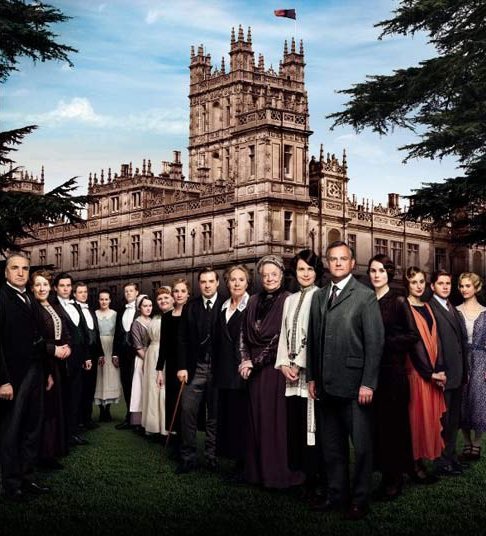
Downton Abbey Season 4 sneek peek - plus trailer!

Its the moment we've all been waiting for! Downton Abbey season 4 officially kicks off on September 22 in the UK and for us here in the states on January 5th, 2014. Our schedule for episodes on PBS are:

Episode 1 – Jan 5, 2014
Episode 2 – Jan 12, 2014
Episode 3 – Jan 19, 2014
Episode 4 – Jan 26, 2014
Episode 5 – Feb 2, 2014
Episode 6 – Feb 9, 2014
Episode 7 – Feb 16, 2014
Episode 8 – Feb 23, 2014


Here's a brief peek at some new cast members.


Lily James as cousin Lady Rose
Tom Cullen as Sir Anthony Gillingham


Julian Ovenden as Charles Blake
 
 
Mary and Branson- single parents- how sad!
Branson with baby Sybbie - isn't she cute! 
Three leading ladies - minus one! :(


For all of you that just can't wait. Here's the just released trailer to whet your appetite!


Hang in there die hard Downton fans- January will be here before you know it!
 
 
--Amanda

Friday, August 30, 2013

Introducing..... King George VII! Plus Downton Season 4 update!


The pictures of Prince George Alexander Louis, future king of England are finally out!
How precious!
What a great Dad! He even changes diapers!
 
A family portrait!
 
 
                                                                                                      Don't forget the dogs!
 
Do you think George looks like his Dad?
 
 
Hope you enjoyed this intimate look at the future King! Its history in the making!


Downton Abbey Fans Rejoice!! Tomorrow, August 31st the official trailer for Downton Season 4 is released. Check back tomorrow for a link and get ready for another great season starting in the UK in September and for us here in the states in January! What surprises lay in store this year??


Wednesday, July 31, 2013

A Creative Mind: Fostering and Keeping it!

A writer's best friend is their creativity. Without it, writing a 90,000 word novel would be impossible or at the very least incredibly boring. But how do you keep your creativity up and page after page, novel after novel? The following tips will help you to keep that section of your mind from losing its edge.


CREATIVITY TIPS:

1) Read

All writers need to keep being readers. I get some of my best ideas from continual reading. This means both current and classic novels. Some people think classic works are from days gone by. However challenging your mind with classic novels keeps the ideas flowing. Also, keep reading contemporary novels as well. I can’t wait until new releases from my favorite authors come out. They don’t come out fast enough for me!

2) Ask Questions

One of the best ways to maintain creativity is to ask questions and seek out the answers. Will there ever be enough time in life to get all of the answers to all of the questions we humans have? No! When you stop asking questions and seeking new information, you become dull indeed!

3) Look - Listen- Learn

The power of observation! Keep your eyes and ears open -then take notes. Some of my best last name ideas come from just looking at products in the grocery store. I am always on the lookout for story ideas, names and places and I keep a list of all of them as you never know when they might come in handy.

4) Dreams

Have you ever woke up in the middle of the night with a great story idea! Make sure you keep a pen and paper nearby. Also, never stop dreaming during the day as well. Writers are thinkers and dreamers. When we lose this we lose the spark on our stories.

Creativity abounds! Books, movies, music, children, pets, vacations, etc etc. Let the creativity flow in your mind and right onto the pages of your books!!

Happy Writing!
-Amanda


ROYAL BABY UPDATE!

Congratulations to the Duke and Duchess on the birth of their baby boy George Alexander Louis (nickname Georgie)  the future King of England!! Next week's post will contain baby pictures from the first photo call!!

Monday, July 8, 2013

Royal Babies Throughout The Ages


With the birth of the Prince or Princess of Cambridge – and future King or Queen of England, just days away, I thought it might be fun to take a peek through the Royal photo albums and look at some previous British monarchs – when they were babies!


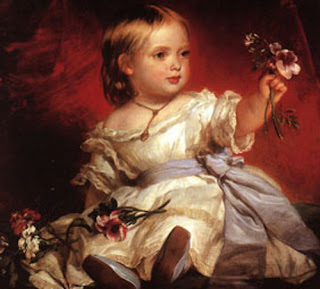
This is the future Queen Victoria. She looks much different now than in the pictures we usually see of her. I wonder if it was difficult to get her to sit still for the portrait. :)


King Edward VII looking much younger than in his coronation pictures. He was the second child of Queen Victoria and Prince Albert and waited over 60 years to become king!


The future King George V looking dashing in a sailor suit. Unfortunately, I couldn't find a picture of George or Georgie as he was called, as a baby.

 Two kings in one picture! King Edward VIII (far right) who abdicated in order to marry Wallis Simpson and his brother and successor, George VI, who grew up to pull the country through WWII and who is father to our current Queen.

 Our current Queen, looking adorable and wearing lovely jewelry even at a young age!


 The Queen looking down at a baby Prince Charles. Love the bassinet!

 Princess Di and baby Will! Smiles all around!


And the beautiful Princess Kate, accompanied by Prince Harry and Prince William!
 
 
Just a few more days to wait, everyone!!


Thursday, June 6, 2013

How To Accomplish Your Summer Writing Goals!

Many writers, myself included, rely on the summer months as their time to “power write.” Longer days and fewer winter activities make this the perfect opportunity to get more writing done.

Some others might spend summer taking a much needed break from the written word, but for those of you who try to accomplish more writing during the summer, I have four tips to help you make the most of the upcoming summer months.


1) Be very selective about what you spend your time on. For those of us who like to say yes to everything, this goes against our natural inclinations. But the truth is, none of us can do it all. A very wise college professor once said “Life is about choices.” We all can point to time that we waste on unnecessary activities such as watching television, surfing the internet, or talking on the phone. Writing is a discipline like everything else. If you want to achieve your goals you have to set boundaries around your activities. And as writers, we have to decide when to say no and when to say yes. If the Lord leads, let this be the summer where you say YES to writing.

2) Establish a strict schedule.Think about getting up an hour earlier, or going to bed an hour later. Squeeze extra writing time in where you can. Author Jody Hedlund uses the quiet moments at the beginning and end of the day for writing, instead of other administrative tasks, such as blogging, twitter, facebook, emails, and the like. Get your writing done FIRST as that is your main goal and use any leftover time for less important tasks.

3) Set a goal. This device is used by many successful and disciplined people and it works for writers
too. Set a reasonable goal for yourself and try to keep working toward it. Maybe it’s writing 50,000 words, or sending out 20 query letters. You might not always succeed but you’ll get a lot more done knowing you have a finish line. And that’s where number four comes in.

4) Reward yourself. Whatever you do, no matter how trivial, reward yourself with something special. Go see a movie, take a walk, or treat yourself in some small way. Of course, achieving the goal is by itself a great reward!

I hope this summer is a blessed one for you and your writing journey!!

Any ideas of how you plan to accomplish your writing goals this summer? I'd love to hear them !!

Happy Writing!
--Amanda

Saturday, May 25, 2013

What novel became the highest grossing movie of all time?


Recently, I‘ve been re-watching one of my favorite movies. The film came from one of the bestselling books of all time, and is considered the second favorite book of American readers, just behind the Bible. This book has all the elements that are necessary for a bestselling novel and I think as writers today we can learn a lot from classic books such as this to help us improve our own writing. If you haven’t already guessed what book I’m referring to, it’s Margaret Mitchell’s Pulitzer Prize winning novel, Gone With The Wind. Now before all you lovers of today’s current fiction scoff at looking back to the classics for inspiration, let’s take a look at the elements of this book and see what we can glean and incorporate to enhance our own writing, upping that elusive bestselling status. To that end, I’ve came up with three elements included in Gone With The Wind that need to be included to produce a bestseller today.

   1) Protagonists We Love to Hate and Hate to Love:  While we may not want Scarlet or Rhett as neighbors or best friends, we secretly love them and wish we could write such characters that get on our nerves, stir us to deep emotion, and cause us to cheer them on all the while knowing that they get what they deserve. The very name Scarlett is representative of fire and wildness. She is the epitome of survival in the harsh aftermath of the Civil War and represents more than just a mere female leading lady. She is the South at its best and the South at its worst. She knows how to take lemons and make lemonade, even if it is at the expense of everyone around her. Through all this she still hangs onto the past and we see her continued vulnerability in the one thing that she thinks she wants, but in actuality wouldn’t be good for her - the less than manly, romantic dreamer, Ashley Wilkes. Then there’s Rhett, her counterpart scalawag and comrade in southern connivery. While we hate to admit it, all us ladies would be swept off our feet by this ungentlemanly gentleman even though he might not be good for us. Compared to the boring Ashley we wonder why Scarlett can’t see the forest for the trees. Sometimes we just want to slap her and tell her to wake up. But oh, that we could write such characters that ignite such emotion in our readers. Bestselling novels, movies, and even television all have characters that we love to hate. Think Lady Mary and Thomas in Downton Abbey, Emma Woodhouse from Emma, Jo March in Little Women and Willoughby from Sense and Sensibility. All these characters have one thing in common that is a necessary ingredient in our leading men and ladies- Passion! They may be debilitatingly irritating but they all are extremely passionate characters that cause us to relate to their human strivings.

2)      Counterpart Secondary Characters: If it weren’t for Melanie and Ashley how would we see the opposite of Scarlett and Rhett? We need these characters to balance out our protagonists and we also need them to make us agonize when their very goodness still leaves them with problems and pain. Ashley represents the lost south and the dreamy status that it once held in the heart and mind of Scarlett. A past that she cannot regain and really would she have survived in its trivialities of parties, balls and teas? She would have had no need for her passion, spunk and ability to survive against all odds. Ashley balances out Rhett’s wildness, and yet for all his outward gentility he is inwardly miserable. Melanie, whom Rhett considers to be the only truly decent person he has ever know, counterbalances Scarlet and we can just envision her as our sister or best friend. Inwardly we know we should be more like her but in our human nature we just can’t help being more like Scarlett. Because of her innate goodness we feel all the worse when tragedy befalls her. Again, Mitchell’s genius comes through with this ability to create characters that cause us to experience this love hate relationship. We see this same counterbalance in other popular works of fiction. Think Sybil or Anna in Downton, Beth in Little Women or Colonel Brandon in Sense and Sensibility. A good novel must include characters such as this that counterbalance the flaws of our protagonists.

   3) A Setting That Inspires: The timeframe that the novel takes place provides ample opportunity for conflict between the characters and also stirs emotions in us with the history taking place. The Civil War was a time of division not only between north and south but also between families and even between the past and the future. Always causing examination between what is, was, and what could be. Mitchell uses this framework as the backdrop for her characters to develop and grow. Really compared to the setting and history within the novel, the characters are small potatoes. In a sense the setting, historical time period, and the very land of Tara are characters in and of themselves. Tara becomes the “mother figure” and nurturing element in Scarlett’s life after the death of her human mother as it was part of her so deeply all her life and in the generations that came before her. As Rhett says “You get your strength from this red earth of Tara, you’re part of it and it’s a part of you.” Once again, Mitchell gets us so deeply ingrained within the setting, land and history that we feel as though we are there living it right along with the characters. Good novels all use this technique to make the story come alive and not just feel like these elements are only afterthoughts. The characters are so caught in the time in which they live that they are paralyzed to act or think differently even though they stretch the bounds to the breaking point.  Think Charles Dickens’s Oliver Twist and Edith Wharton’s The House of Mirth and The Age of Innocence. Wharton was another master at using this in her novels.

It took Margaret Mitchell 10 years to write Gone With The Wind and she only wrote it to the pass the time while trying to recover from an auto injury that refused to heal. It was the only book of hers published in her lifetime. The movie version received 10 Academy Awards and is considered the highest grossing movie of all time and one of the most successful period romance novels of all time. This post is not to say that a great novel has to take 10 years to write or that it should be as long as this book (one critic said it was too long and should have been shortened from its 1000 pages down to 500- imagine that!) But I am saying that it takes these elements to make a great story. Several current works of fiction that I have recently read also contain these elements and one of them is currently up for several Christian Fiction awards. So when crafting your stories, think of these elements. And if they are lacking in your work, you just might want to get out that dusty copy of Gone With The Wind or sit back to watch Scarlett and Rhett dance across the backdrop of Atlanta. While they are entertaining, they also are bound to inspire you to new heights in your own attempt at writing a bestselling novel.
 
Happy Writing!
--Amanda


Wednesday, May 22, 2013

How does a book make the New York Times Bestseller list?


Ever wonder how books make it to the New York Times Bestseller list? I was thinking about this, as I read the list whenever I can, and thought it might be interesting to see how books make it on the list and the criteria involved.
According to Reader Views (read the whole article here: http://www.readerviews.com/Articles-MarketingWhatDefinesBestseller.html) the process of a book making it on this list is a rather arbitrary one. The New York Times has relationships with various independent and chain bookstores and wholesalers throughout the United States,  that report their weekly sales to the New York Times. These sales do not include sales of books through the internet, such as Amazon, or in department stores, or even in stores such as Walmart. The books that sell the most copies each week (during a seven day time period) in the stores they are monitoring determine which ones end up on the bestseller list.  According to Wikipedia, “The sales figures are widely believed to represent books that have actually been sold at retail, rather than wholesale, as the Times surveys booksellers in an attempt to better reflect what is purchased by individual buyers”. So say your book actually outsells a bestseller in sales in your hometown of West Branch, Michigan (my hometown). This book will not make the list because your bookstore is not reporting those sales to the New York Times. Also, the sales must occur over a short period of time (seven days) rather than slow steady sales over a longer period of time. Accordingly, a book that sells over a million copies over the course of several years will not make the list, even if its lifetime sales are more than a New York Times bestseller. This is why you will see writers actually asking readers to not purchase their books in stores or on Amazon until a certain date. They then put out promotions during that time to encourage purchasing, thus making sales during that specific timeframe very high. If enough sales are achieved during this time they then make the New York Times bestseller list or Amazon’s top seller list. To achieve a ranking in Amazon’s 1-10 list, a book must sell over 500 copies in a day.

Michael Hyatt has an article on his blog telling how he achieved his goal of getting his book Platform on the New York Times bestseller list. Along with many other techniques, he actually asked people not to purchase his book before the official release date and pushed for big sales during that week by offering “can’t say no” promotions. As a result of this he sold at least 11,000 copies during that first week thus making the bestseller list.
So does making it on the New York Times bestseller list actually constitute a bestseller book? Many books sell over a million copies in a short period of time and then quickly fade from the spotlight. Whereas books, like the Bible, or certain classics, never appear on any list but their total sales far outsell any bestseller, just because they are good literature, or books that stand the test of time.

So there you have it. If your goal is to get on the New York Times bestseller list or another bestseller list you’ve got a big job ahead of you. Frankly, I think we as writers should concentrate on producing the highest quality fiction possible and let the bestseller status take care of itself.  

Happy reading and writing!
-Amanda